Booking a skip bin is easy. Knowing exactly what you’re allowed to throw in it is where most people get caught out. Some items seem obvious, others aren’t, and a few can result in extra fees or a bin that won’t get collected at all. This guide breaks down exactly what can go in a skip bin, what can’t, and where a few tricky items like mattresses and asbestos actually stand.
What Can Go in a Skip Bin?
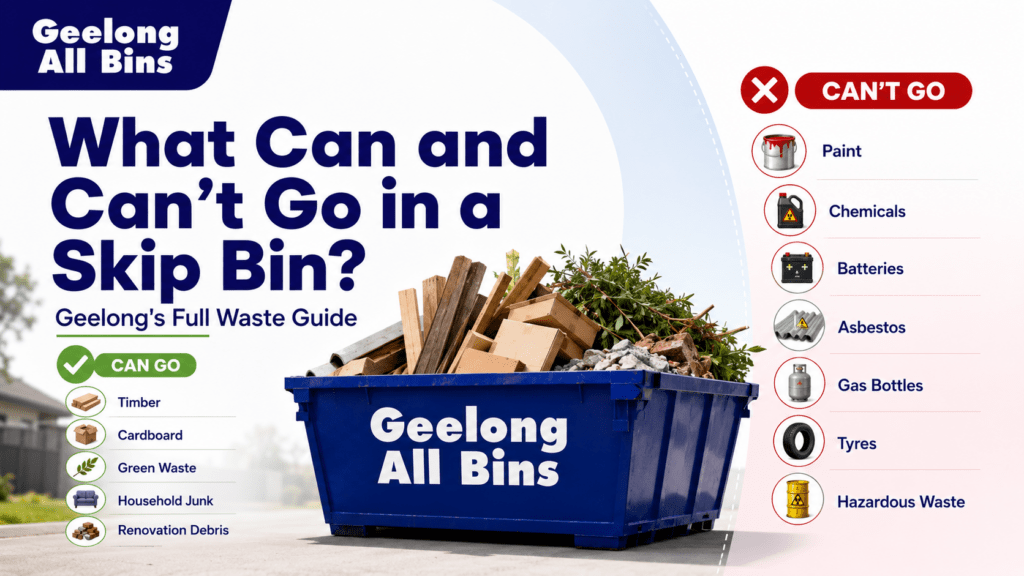
Most general household, garden, and renovation waste is accepted in a standard skip bin. Here’s a quick-reference list of commonly accepted items:
- Household rubbish and general junk
- Furniture (couches, tables, cabinets, wardrobes)
- Timber and untreated wood
- Cardboard and packaging
- Carpet and underlay
- Tiles, bricks, and concrete (in smaller quantities)
- Soil and dirt (weight limits apply)
- Garden waste and green waste (branches, leaves, clippings)
- Metal offcuts and small appliances
- General building and renovation waste (plasterboard, timber offcuts)
If you’re unsure whether a specific item is included, it’s always worth a quick call to your provider before you start loading the bin.
What Geelong All Bins Accepts (and Doesn’t)
At Geelong All Bins, we accept a wide range of waste types, and keeping your bin to a single waste stream can also work out cheaper — single-stream loads are easier to recycle, so they attract a discount. Here’s how our accepted waste types break down:
- Garden & Green Waste — Branches, lawn clippings, hedge trimmings, and organic garden material, responsibly composted rather than landfilled.
- Bricks & Concrete — Rubble, pavers, blocks, and masonry from demolition or construction sites. Single-stream concrete loads attract a discount.
- Scrap Metal — Household appliances, tools, steel offcuts, aluminium, and structural metal. Metal-only bins are discounted and 100% recycled.
- Building Renovation Waste — Timber, plasterboard, carpet, tiles, and general renovation debris from home or commercial fit-outs.
- Office & School Cleanouts — Old furniture, partitions, equipment, whiteboards, and general office or classroom waste.
- General Mixed Rubbish — Household junk, combined renovation waste, moving leftovers, and general cleanout material.
Not accepted: asbestos, liquid waste, and hazardous materials. These need a specialist disposal method rather than a standard skip bin.
If your job fits neatly into one of these categories — say, a pure concrete clean-up or an all-metal job — it’s worth mentioning that upfront, since a single-stream bin could save you money compared to a mixed load.
What Can’t Go in a Skip Bin?
This is the list that catches people out. Certain items are restricted because they’re hazardous, need specialised disposal, or simply aren’t accepted under local waste regulations. Commonly prohibited items include:
- Asbestos and asbestos-containing materials
- Chemicals, solvents, and paints
- Batteries (car and household)
- Gas bottles and pressurised containers
- Tyres
- Liquids of any kind, including oils
- Medical or clinical waste
- Food waste in large quantities
- Fridges, freezers, and air conditioners (due to refrigerant gases)
- Asphalt
If any of these end up in your skip bin, it can lead to the bin being refused for collection, extra sorting fees, or in some cases, a completely separate disposal process being required.
Can You Put a Mattress in a Skip Bin?
This is one of the most common questions we get, and the answer is: it depends on the provider and the bin type. Mattresses are bulky and take up significant space relative to their weight, so many general skip bins either restrict the number of mattresses allowed or charge an additional fee per mattress due to the way they’re processed at the tip. Some providers exclude them entirely and require a separate mattress collection instead. Always check with your provider before assuming a mattress can go straight in with everything else.
What About Asbestos?
Asbestos is treated very differently to general waste, and for good reason — it’s a serious health hazard if disturbed or handled incorrectly. Asbestos cannot go in a standard skip bin. If your renovation or demolition involves asbestos-containing materials (common in older Geelong homes, particularly in eaves, fencing, and old bathroom sheeting), it needs to be handled by a licensed asbestos removalist and disposed of through an approved facility.
Some skip bin providers offer dedicated asbestos bins that meet the strict handling and disposal requirements, including sealed packaging and specific transport rules. If you suspect your property might contain asbestos, it’s always safer to get it professionally assessed before any demolition work begins, rather than risk it ending up in general waste.
General Waste vs Green Waste: What’s the Difference?
It’s a common mix-up, especially for home renovation and garden jobs happening at the same time. General waste covers everyday rubbish, furniture, packaging, and renovation materials. Green waste refers specifically to organic garden material — branches, leaves, grass clippings, and untreated timber offcuts from trees or shrubs.
The distinction matters because green waste is often processed differently (composted or mulched) rather than sent to landfill, and mixing large volumes of green waste into a general skip bin can sometimes affect pricing or acceptance, depending on your provider. If you’ve got a big garden job alongside a renovation, it’s worth asking whether a dedicated green waste bin makes more sense.
Skip Bin Restrictions in Geelong: Why They Exist
Restrictions on what can and can’t go in a skip bin aren’t arbitrary. They exist to:
- Protect the health and safety of waste handling staff
- Meet EPA Victoria regulations around hazardous materials
- Ensure recyclable materials like metal and green waste are processed correctly rather than landfilled
- Avoid contamination that can affect an entire bin load
Sticking to the accepted items list isn’t just about avoiding fees — it also means your waste gets sorted and processed the right way.
Not Sure What You Can Bin? Just Ask
Every job is different, and some waste doesn’t fit neatly into a list. If you’re planning a renovation, demolition, or big clean-up in Geelong and you’re not sure what’s allowed, the easiest option is to talk it through with your provider before booking. It saves you from surprise fees, rejected loads, or realising halfway through a job that something needs a separate disposal method.
At Geelong All Bins, we’re happy to run through your specific job and let you know exactly what can go in your skip bin, and what needs a different solution.