Ask most people what size skip bin they need and you’ll get the same answer: “I have no idea.” That’s not a failure on their part. Skip bin sizes are measured in cubic metres, and almost nobody has a feel for what 4m³ looks like. A far more useful question is: how many ute loads or trailer loads is that? This guide translates every common skip bin size into things you can actually picture, so you can choose the right one the first time.
A Quick Note on How Sizes Work
Skip bin sizes refer to volume in cubic metres (m³), not physical dimensions. A 6m³ bin holds roughly six cubic metres of loose material, filled up to the fill line. The comparisons below are rough, real-world guides rather than exact figures, since a ute tray, a trailer, and how tightly you pack all vary. Think of them as a reliable starting point, not a measurement to the millimetre.
For reference, a standard 240-litre wheelie bin holds about 0.24m³, which is the yardstick used for the wheelie bin comparisons below.
Skip Bin Sizes at a Glance
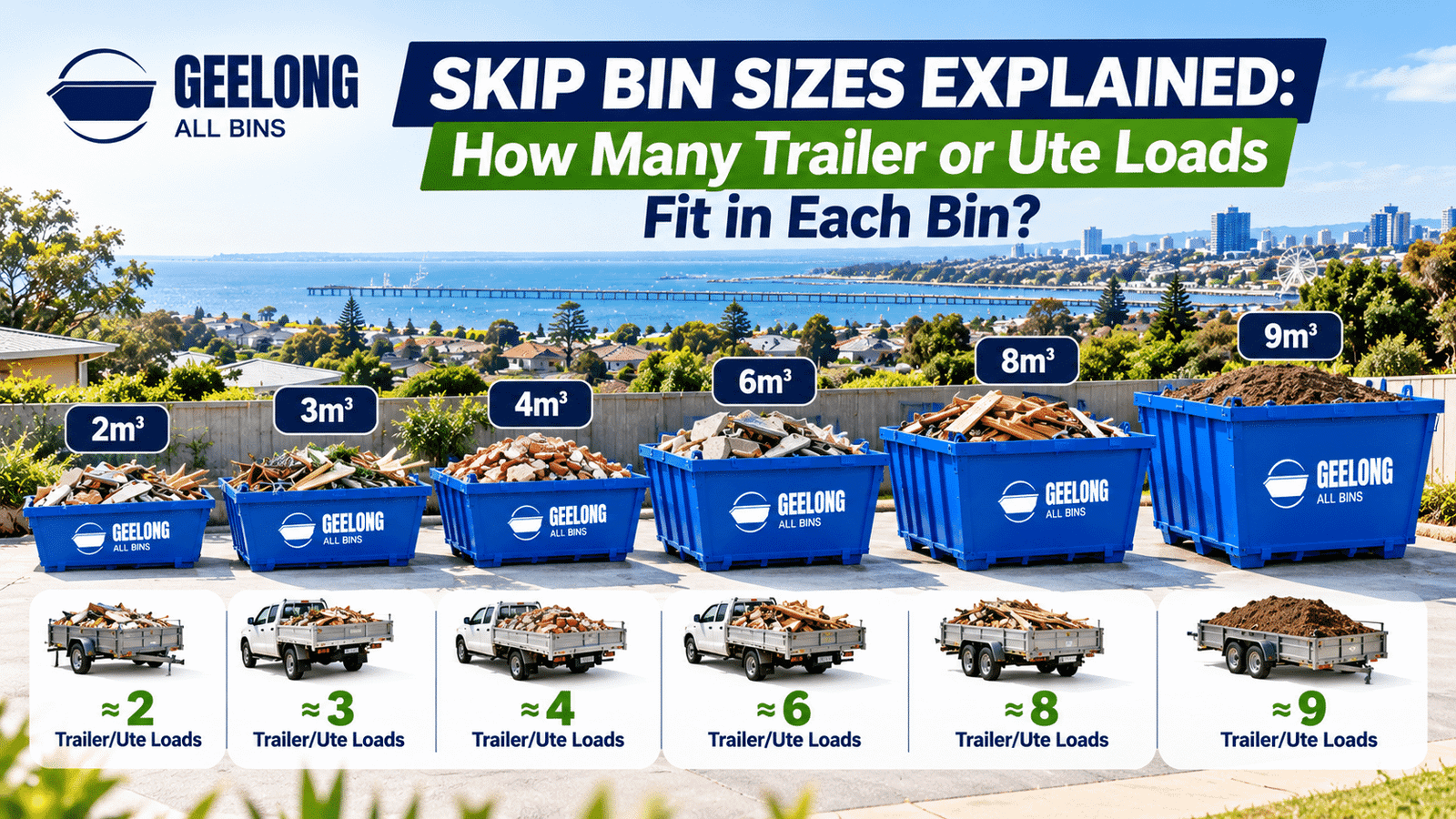
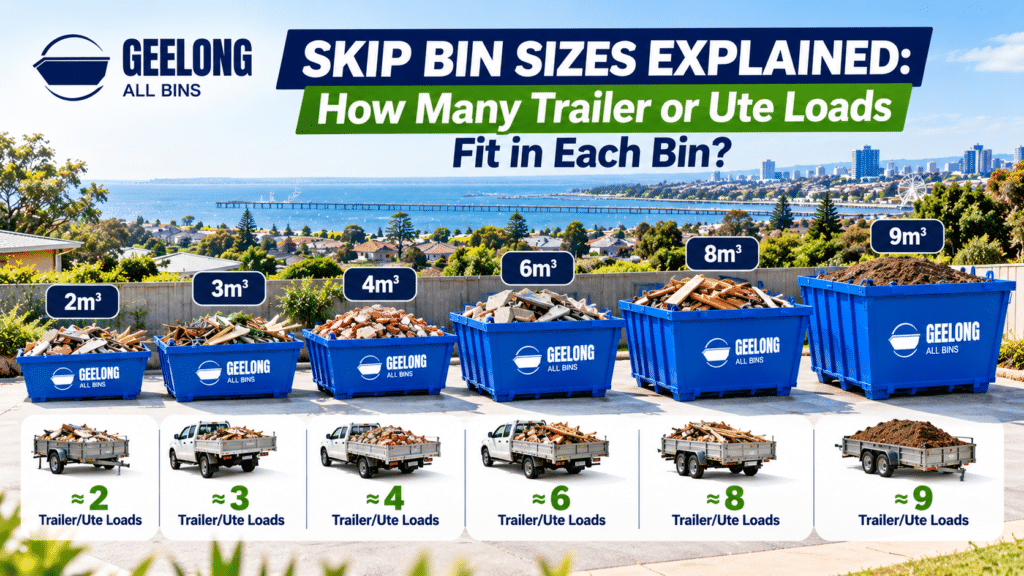
| Bin Size | Approx. Ute Loads | Approx. Trailer Loads (6×4) | Approx. Wheelie Bins | Best For |
| 2m³ | 1–2 | 2 | 8 | Small decluttering, single-room clean-out |
| 3m³ | 2–3 | 3 | 12 | Small home clean-outs, garden tidy-ups |
| 4m³ | 3–4 | 4 | 16 | Bathroom reno, garage tidy, medium garden job |
| 6m³ | 5–6 | 6 | 25 | Kitchen reno, house moves, full garden clean-up |
| 8m³ | 7–8 | 8 | 33 | Larger renovations, whole-house clean-outs |
| 10m³ | 9–10 | 10 | 40 | Major renovations, small demolitions |
| 20m³–30m³ | 18–30 | 20–30 | 80–120 | Construction sites, large demolitions, commercial jobs |
Mini Skips: 2m³ to 4m³
2m³ is the smallest option and suits genuinely small jobs: clearing out a single room, a few bulky items, or a modest pile of garden clippings. If you’re debating between a car boot run and a skip, this is the size that replaces a handful of boot loads.
3m³ is where Geelong All Bins pricing starts, from $320 including delivery, a 7-day hire, pickup, and disposal. It covers roughly two to three ute loads, which makes it a good fit for a small home clean-out or a weekend garden tidy-up.
4m³ is the sweet spot for a lot of single-room jobs. A bathroom renovation, a garage tidy, or a medium-sized garden job typically fits comfortably, and it’s the size people most often wish they’d chosen after ordering a 3m³ and running out of room.
Mid-Range Skips: 6m³ to 8m³
6m³ is the most popular residential size. It handles a full kitchen renovation, a house move, or a proper garden overhaul without needing a second delivery, and it replaces around five to six ute loads or six trailer loads. If you’re genuinely unsure between 4m³ and 6m³, 6m³ is usually the safer call, since the price difference is smaller than the cost of a second bin.
8m³ suits larger renovations, whole-house clean-outs, or jobs that combine household and garden waste. It’s the step up when a 6m³ would be tight but a hook bin is overkill.
Large Skips and Hook Bins: 10m³ to 30m³
10m³ marks the move into hook bin territory, built for major renovations, partial demolitions, and larger commercial clean-outs. Hook bins are loaded differently to standard skips and can take heavier material.
20m³ to 30m³ are for construction sites, large demolitions, and industrial or commercial jobs generating serious volume. Pricing at this scale is quoted individually based on waste type, volume, and site access rather than a fixed price list.
Why Weight Matters as Much as Volume
Here’s the part most size guides leave out: some waste is heavy even when it doesn’t take up much space. Bricks, concrete, tiles, and soil can hit a bin’s weight limit long before the bin looks full. That’s why heavy material like concrete is often better in a smaller bin, or a dedicated single-stream bin, rather than a large general skip. A 6m³ bin full of bricks isn’t the same job as a 6m³ bin full of cabinetry, and your provider should ask what’s going in before recommending a size.
Three Rules of Thumb for Choosing
- Estimate in ute loads or trailer loads first, then match to the table above. Counting what you’d need to haul yourself is far easier than guessing cubic metres.
- When between two sizes, go up. A slightly larger bin costs far less than a second delivery or a rushed top-up.
- Separate heavy waste where you can. Keeping bricks and concrete apart from bulky general waste can unlock a single-stream discount and avoid weight issues.
Still Not Sure? Ask for Sizing Help
If your job sits between two sizes, or you’re dealing with a mix of heavy and bulky material, the quickest fix is to describe the job when you request a quote. A good provider will recommend a size based on what’s actually going in, not just push the biggest option.
Get a free skip bin quote from Geelong All Bins or call 03 5277 1007 for sizing advice.
As a rough guide, a 3m³ skip holds around two to three ute loads, a 4m³ about three to four, and a 6m³ about five to six. Exact numbers vary with your ute's tray size and how tightly you pack.
A 6m³ skip bin holds roughly six standard 6x4 trailer loads, which is why it's a popular choice for renovations and house moves that would otherwise need multiple tip runs.
The 6m³ skip is the most common residential size, handling kitchen renovations, garden overhauls, and house moves. The 3m³ and 4m³ mini skips are popular for smaller home clean-outs.
If you're between two sizes, going up is usually the better call. The price difference is typically smaller than the cost of a second delivery or a top-up bin halfway through the job.
Yes. Heavy materials like bricks, concrete, and soil can reach weight limits before a bin looks full, so they're often better in a smaller or dedicated single-stream bin rather than a large general skip.