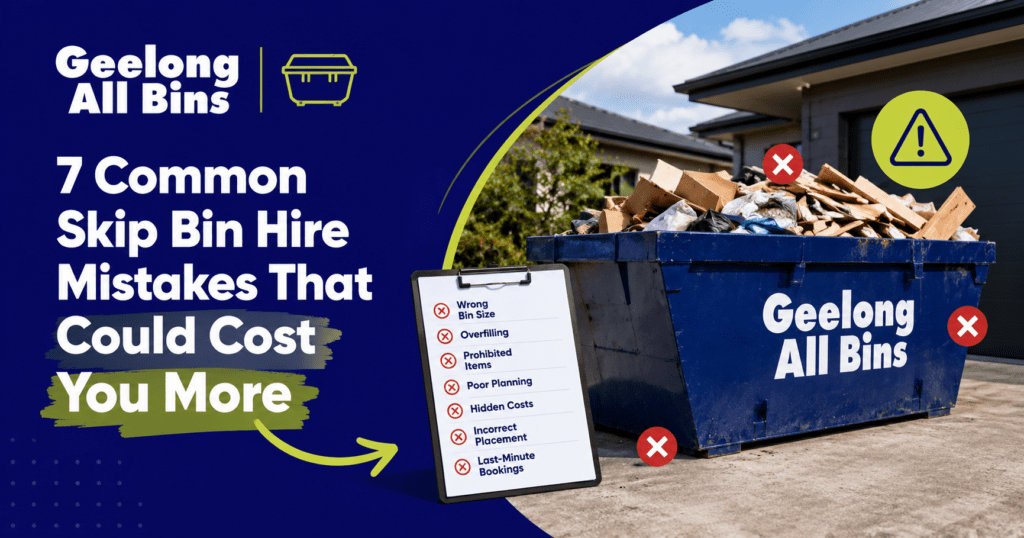
Skip bin hire looks simple: pick a size, book it, fill it, done. But the difference between a smooth job and an expensive headache usually comes down to a handful of avoidable mistakes made before the bin even arrives. If you’re about to book skip bin hire in Geelong, here’s what trips people up most — and how to sidestep each one.
1. Guessing the Bin Size Instead of Calculating It
This is the single most common — and most expensive — mistake. Order too small, and you’re paying for a second bin or an awkward top-up delivery halfway through the waste. Order too large, and you’ve paid for space you never used.
How to avoid it: Match the bin to the waste, not to “just in case.” A 3m³–4m³ bin suits a small home cleanout or garden waste run; 6m³–8m³ covers most kitchen or bathroom renovations and house moves; 10m³ and above is for construction, demolition, or genuinely large-scale jobs. If you’re unsure, ask for guidance when you request your quote — sizing advice should be part of the conversation, not something you’re left to guess alone.
Learn more – What Size Skip Bin Do I Need? A Geelong Bins Sizing Guide
2. Not Checking What’s Actually Allowed in the Bin
Every skip bin company has a list of prohibited items, and it exists for legal and safety reasons, not as fine print to catch you out. Asbestos, liquid waste, and hazardous materials are not accepted in a general skip bin — and discovering this after the bin is already full and sitting on your nature strip is a costly, stressful way to find out.
How to avoid it: Confirm accepted and prohibited items before you start loading, not after. If you’re clearing an older home, ask specifically about asbestos — renovations and demolitions on pre-1990s properties are the most common source of this mistake, and it’s far easier to arrange separate, correct disposal upfront than to deal with a contaminated load later.
3. Overfilling the Bin Past the Fill Line
It’s tempting to keep piling waste on once the bin looks “nearly full,” especially if you’re trying to avoid booking a second one. But every skip bin has a legal fill line, and loading above it isn’t just against the rules — it makes the load unsafe to transport, and drivers are entitled to refuse collection until it’s brought back under the line.
How to avoid it: Load flat, not high. Break down bulky items (flatten boxes, disassemble furniture where possible) to use the space efficiently, and stop at the fill line even if it means the bin looks less than completely full. A bin collected on schedule beats a full one that has to be revisited.
4. Skipping the Council Permit When Placing a Bin on Public Land
If your skip bin needs to sit on a nature strip, footpath, or any part of council-owned land — because there’s no room in the driveway — a permit is required. Placing a bin on public land without one can result in fines, and it’s an easy detail to overlook when you’re focused on the job itself rather than where the bin will actually sit.
How to avoid it: Confirm where the bin will be placed before delivery day. If it’s anywhere on public land, sort the permit out in advance — your skip bin provider can usually tell you whether one applies to your situation and how to arrange it, so it isn’t a last-minute scramble.
5. Mixing Waste Types That Could Have Been Kept Separate
Throwing everything into one mixed bin feels efficient in the moment, but it’s often the more expensive choice. Mixed loads are harder to sort and recycle, and single-stream bins — containing just one waste type, like green waste only or concrete only — typically attract a discounted rate precisely because they’re easier to process.
How to avoid it: If your job naturally produces separate piles — bricks in one area, timber in another, garden waste elsewhere — ask whether single-stream bins work out cheaper for your job before defaulting to one mixed skip. It’s a rare case where the more sustainable option is also the cheaper one.
6. Booking Without Confirming What’s Actually Included
A low headline price can be misleading if delivery, pickup, or the hire period itself cost extra on top. This is one of the most common sources of “surprise” costs in skip bin hire, and it’s entirely avoidable by asking the right question upfront.
How to avoid it: Before booking, confirm exactly what the quoted price includes — delivery, hire duration, pickup, and disposal should all be part of one figure, not add-ons discovered on the final invoice. A provider with a genuine no-hidden-fees policy will be able to answer this clearly and immediately.
7. Leaving It Too Late to Book
Skip bin availability tightens up around weekends and peak renovation season, and a last-minute booking can mean settling for whatever size or delivery slot is left — not necessarily what actually suits your job.
How to avoid it: Book a few days ahead where possible, especially for weekend jobs. Same-day and next-day delivery is often available for genuinely urgent needs, but planning ahead gives you more control over size, timing, and price.
Get It Right the First Time
Most skip bin hire mistakes aren’t about the bin itself — they’re about the questions that don’t get asked before booking. A quick conversation about size, waste type, placement, and inclusions upfront avoids nearly all of them.
Get a free, no-obligation skip bin quote from Geelong All Bins or call 03 5277 1007 — quotes are typically returned within 2 hours.