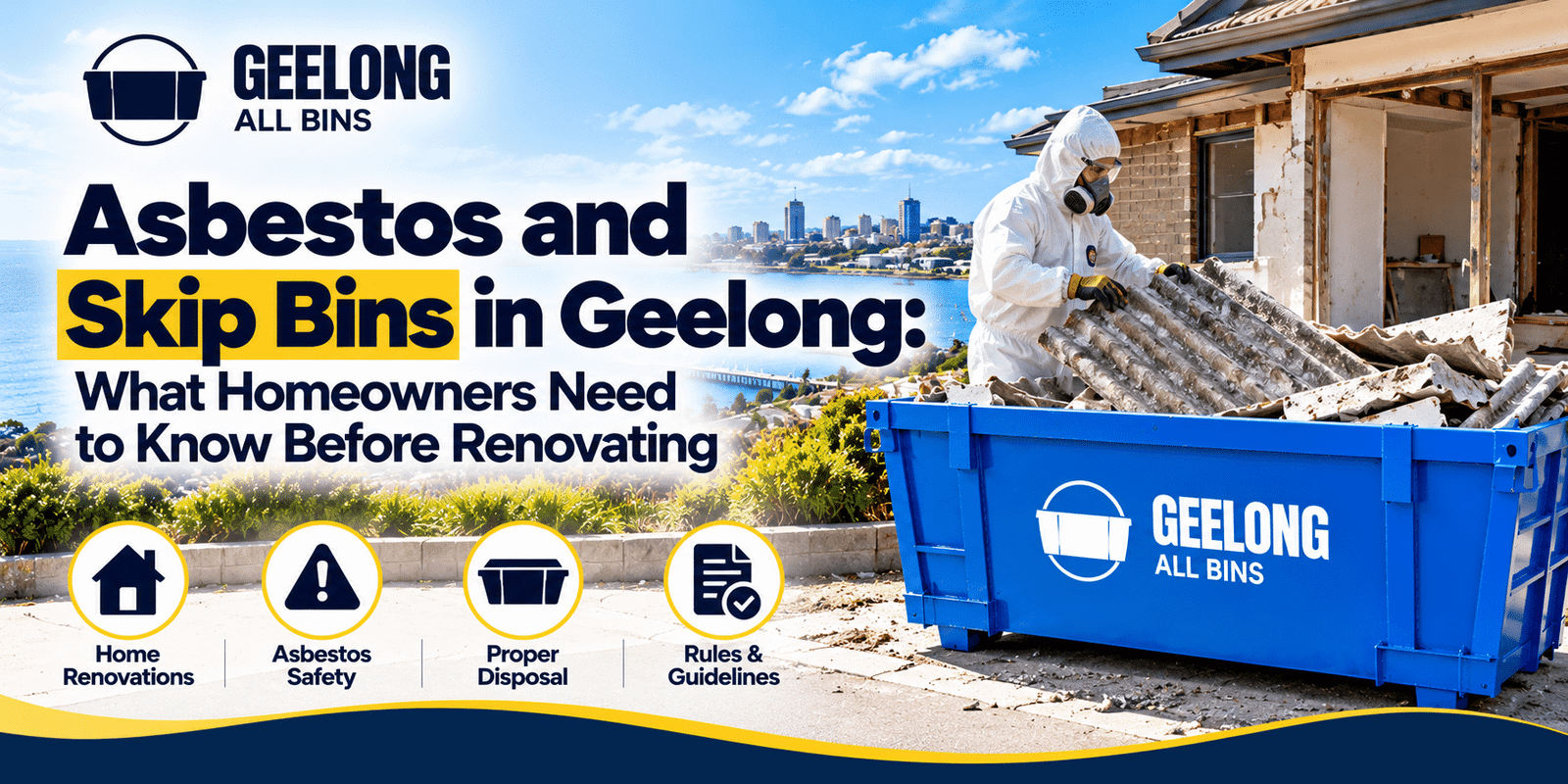
If you’re renovating an older Geelong home, there’s one question worth answering before you book a skip bin, swing a hammer, or pull up a single sheet of old flooring: could any of it contain asbestos? The short answer to “can you put asbestos in a skip bin?” is no. The longer answer covers why, what the Victorian rules say, and how to keep your renovation moving without putting your health or your wallet at risk.
Why Asbestos Is Still a Real Concern in Geelong
Asbestos was widely used in Australian homes for decades and has been banned nationally since 2003. That means any home built before the early 2000s could contain it, and the risk is highest in homes built before 1990. Geelong has plenty of post-war weatherboard and fibro housing, so it’s a genuine consideration for a lot of local renovators, not a rare edge case.
Common places asbestos turns up in older homes include:
- Fibro (asbestos cement) sheeting on external walls, eaves, and sheds
- Bathroom, laundry, and kitchen wall sheeting behind tiles
- Old vinyl flooring and its backing or adhesive
- Roofing sheets and gutters on older properties and outbuildings
- Fencing and backyard structures made from asbestos cement panels
You often can’t tell by looking. The only reliable way to know is testing by a qualified professional.
Can You Put Asbestos in a Skip Bin?
No. Asbestos is not accepted in a general skip bin, and that applies at Geelong All Bins and across the industry. There are good reasons for it:
- Safety: Disturbed asbestos can release fibres, putting drivers, sorting staff, and recycling workers at risk.
- The law: In Victoria, asbestos waste must go to an EPA-licensed facility authorised to receive it. It can’t go in household rubbish, council collection, or a general skip bin.
- Contamination: Asbestos mixed into an otherwise recyclable load can compromise the whole bin, which is a big deal when most of your waste would normally be diverted from landfill.
The practical takeaway: asbestos needs its own separate pathway, completely apart from your skip bin.
What Victorian Rules Say About Asbestos Removal
Asbestos removal and disposal in Victoria is regulated by WorkSafe Victoria and EPA Victoria. In broad terms:
- Small amounts of bonded (non-friable) asbestos such as intact fibro sheeting may, in limited circumstances, be removed by a homeowner. The thresholds are tight: roughly 10 square metres or less, and under an hour of work in any seven-day period.
- Larger amounts, any loose or crumbling (friable) asbestos, or asbestos in a workplace must be removed by a licensed asbestos removalist. Jobs over the small-job threshold also require WorkSafe notification before work begins.
- Disposal must go to an EPA-licensed landfill that accepts asbestos, with the material double-wrapped and labelled.
Even where the homeowner exemption technically applies, WorkSafe recommends using a licensed professional, and the 10 square metres goes a lot less far than people expect. A single fence line or a garage wall can blow past it. These rules can change, so check current requirements directly with WorkSafe Victoria and EPA Victoria before starting any work.
Your Renovation Plan: A Safe Order of Operations
Handling asbestos properly doesn’t have to derail a renovation. A sensible sequence looks like this:
- Identify first. If your home predates the early 2000s, have suspect materials tested before demolition starts, not after.
- Arrange licensed removal where required. A licensed removalist handles removal, wrapping, transport, and disposal at an approved facility, and provides the paperwork.
- Don’t disturb suspect material in the meantime. Avoid cutting, drilling, sanding, or breaking anything that might contain asbestos, and keep power tools well away from it.
- Book your skip bin for everything else. Once asbestos has been dealt with, the rest of your renovation waste (timber, plasterboard, tiles, fittings, general debris) goes in a skip bin as normal.
Timing matters here. Asbestos removal and testing take lead time, so building them into your schedule early avoids a skip bin sitting on your property while the job’s on hold.
What Does Go in a Skip Bin on an Older-Home Renovation
With asbestos handled separately, your skip bin is still the right tool for the bulk of the job:
- Timber, framing offcuts, and old fittings
- Plasterboard and general demolition debris
- Tiles, bricks, and rubble
- Old kitchen cabinetry, vanities, and appliances
- Flooring that has been confirmed asbestos-free
If you’re unsure whether a particular material is safe to load, it’s always better to ask before it goes in the bin, not after.
Learn more – What Can and Can’t Go in a Skip Bin? Geelong’s Full Waste Guide
Why Honest Guidance Matters
Skip bin providers are not asbestos experts, and we won’t pretend to be. What we can do is be upfront that asbestos doesn’t go in the bin, point you toward the right regulators, and help you size and time the rest of your renovation waste properly. Getting this right protects you, your family, your neighbours, and everyone who handles your waste after it leaves your property.
Ready to Plan the Rest of Your Renovation Waste?
Once asbestos is sorted, we’ll take care of everything else. Get a free skip bin quote from Geelong All Bins or call 03 5277 1007, and we’ll help you pick the right size for your renovation.
No. Asbestos isn't accepted in a general skip bin. In Victoria it must be disposed of at an EPA-licensed facility that accepts asbestos waste, usually through a licensed removalist.
You often can't tell by sight. Homes built before the early 2000s, and especially before 1990, may contain it in fibro sheeting, wall linings, old flooring, and roofing. The reliable way to know is testing by a qualified professional.
Only in limited circumstances for small amounts of intact, non-friable asbestos, and WorkSafe still recommends a licensed professional. Larger quantities and any friable asbestos require a licensed removalist. Check current rules with WorkSafe Victoria.
It must be double-wrapped, labelled, and taken to an EPA-licensed facility authorised to accept it. It can't go in household rubbish, council bins, or a general skip bin.
Yes. Once asbestos has been handled separately, everything else (timber, plasterboard, tiles, cabinetry, and general debris) can go in a skip bin as normal.