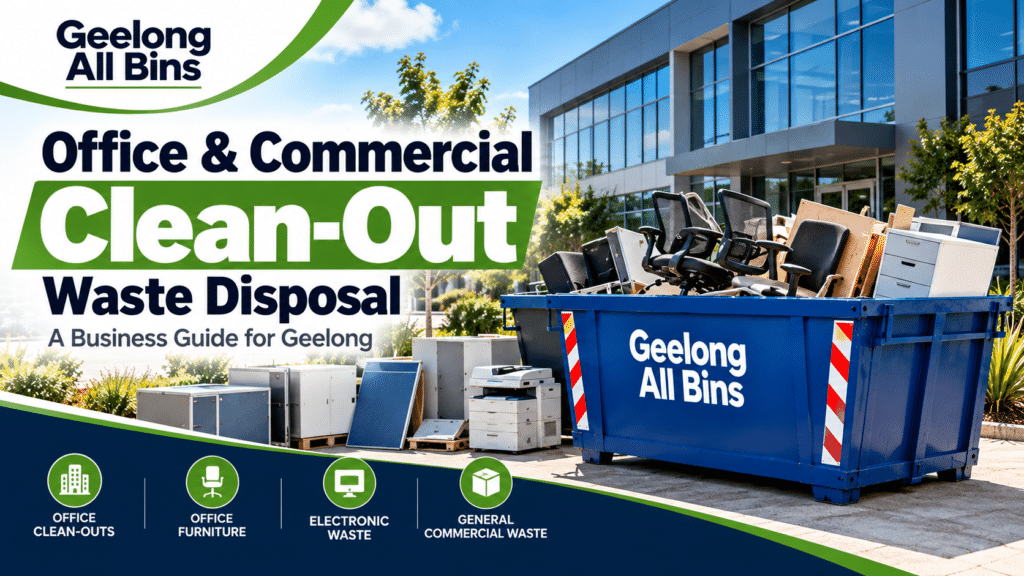
Office fit-outs, retail refreshes and business decluttering projects don’t generate waste like a construction site or a home renovation — but they’re often treated as an afterthought by providers who only think in terms of “residential” or “builders.” Here’s what actually matters when you’re planning commercial skip bin hire in Geelong for a workplace, shop, or business space.
Why Commercial Clean-Outs are Their Own Category
A construction site generates continuous waste across a long build. A home renovation is a one-off, owner-managed job. A commercial clean-out sits between the two: it’s often a single defined project — a fit-out, a lease changeover, a decluttering push — but it happens in a working business environment with its own constraints around access, timing and minimising disruption to trade or operations.
That distinction matters because the logistics of a business clean-out are different from either of the other two categories, even when the waste itself looks similar.
Common Commercial Clean-Out Scenarios
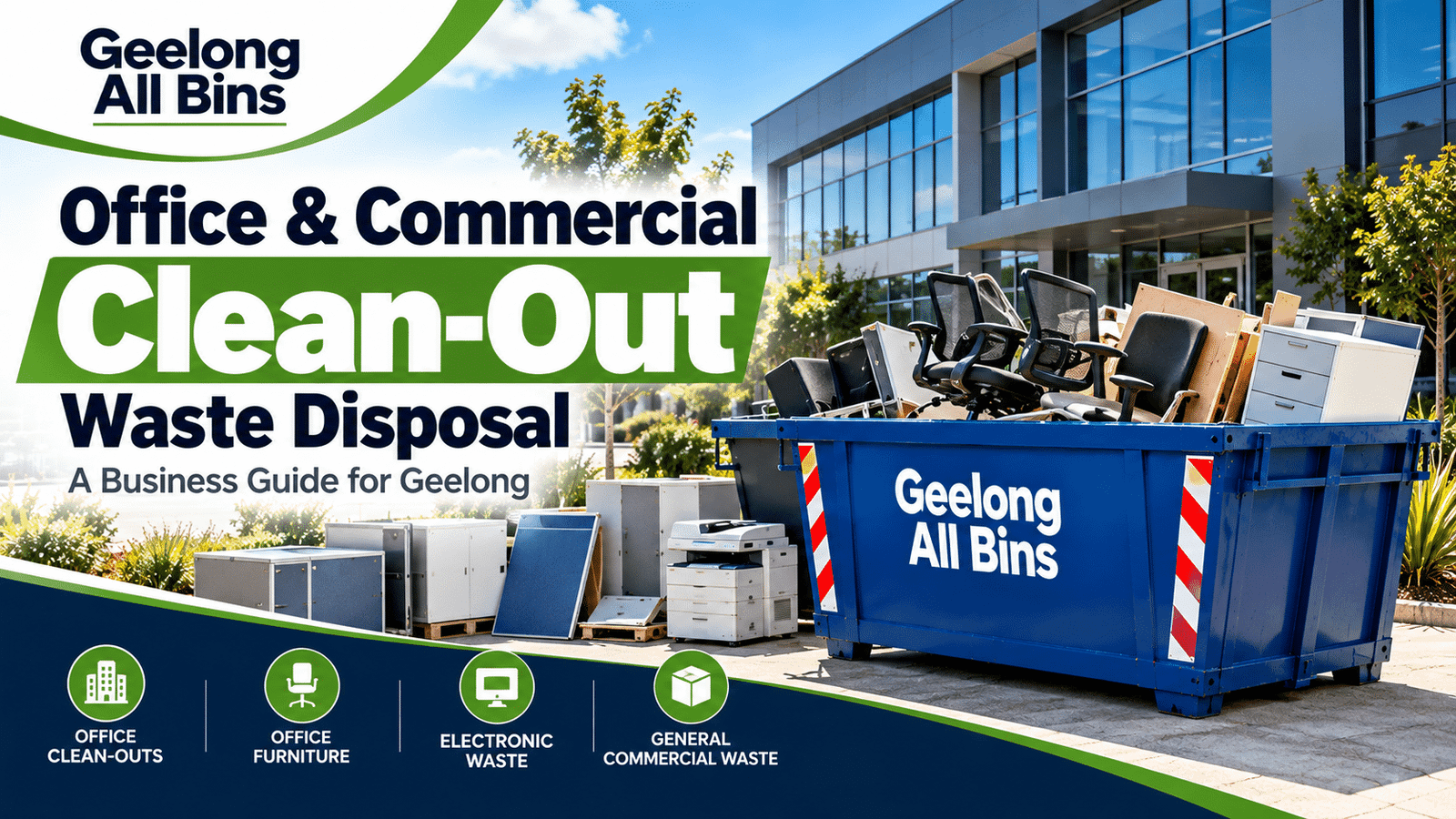
Office fit-outs and refreshes — Old furniture, partitions, carpet tiles, ceiling tiles and general fit-out debris from updating a workspace. Often needs to happen around a tight handover date between the old and new setup.
Retail store clear-outs — Shop fittings, shelving, signage and old stock disposal when a retail space is being refreshed, rebranded, or handed over to a new tenant. Frequently time-pressured around a lease date or opening deadline.
General business decluttering — Years of accumulated stock, old equipment, filing and general clutter that builds up in any operating business and eventually needs a proper clear-out, often outside a specific renovation trigger.
Lease changeovers — Similar to end-of-lease clean-outs for residential tenants, but for commercial space — clearing a unit or office before handover to protect a lease bond or meet a landlord’s requirements.
Warehouse and storage clean-outs — Old stock, damaged goods, packaging waste and general accumulation that builds up in storage and distribution spaces.
Choosing the Right Bin for a Business Job
Commercial clean-outs vary more in scale than residential jobs, so sizing tends to fall into two broad categories:
- 4m³–8m³ mini skips suit most office fit-outs, small retail clear-outs and general business decluttering — jobs generating furniture, fittings and general waste without major structural material.
- 10m³+ hook bins suit larger retail spaces, warehouse clean-outs, or any commercial job combined with fit-out construction work, where waste volume climbs closer to what a small construction site would generate.
Because commercial jobs vary so widely in scope, pricing is generally quoted individually based on waste volume, site access and the specific job — a generic size chart is less useful here than a quick conversation about what’s actually being cleared.
Minimising Disruption to Your Business
This is the part that separates commercial clean-outs from other categories: the job usually has to happen without stopping the business around it.
Timing around operating hours: Delivery and collection can often be scheduled around trading hours, particularly for retail spaces where a skip bin sitting out front during business hours isn’t ideal for customer access or appearance.
Access and placement: Loading docks, rear access and car park placement all need to be considered differently than a residential driveway delivery — especially for shopping centre tenancies or CBD office spaces with limited access points.
Working around a live workspace: For office refreshes happening while staff are still on-site, or retail clear-outs happening around trading hours, coordinating bin placement and loading schedule with the business’s actual operating rhythm matters more than for a one-off residential job.
Repeat and Ongoing Waste Needs
Unlike a single home renovation, many commercial clean-outs aren’t one-off events. Businesses that go through periodic fit-outs, retail refreshes, or seasonal stock clear-outs benefit from an established relationship with a provider who already understands their site, access requirements and typical waste volume — rather than starting the sizing and scheduling conversation from scratch every time.
For businesses with recurring waste needs — regular stock disposal, ongoing decluttering, or multi-site operations — a standing arrangement with a local provider can mean faster turnaround and more consistent service than booking as a one-off each time.
What’s Typically Accepted (and What’s Not)
Commercial clean-outs generally accept the same broad categories as any skip bin — general waste, furniture, fittings, fixtures, packaging, and construction-related debris if the job includes fit-out work. As with any job, asbestos, liquid waste, and hazardous materials aren’t accepted in a general skip bin and need specialist handling — a relevant consideration for older Geelong commercial buildings undergoing a fit-out or refresh.
Learn more – What Can and Can’t Go in a Skip Bin? Geelong’s Full Waste Guide
Compliance and Documentation for Business Clients
For many businesses — particularly those in government, education, healthcare, or larger commercial operations — how waste is handled isn’t just a logistics question, it’s increasingly a compliance one. Being able to show that waste has gone to an EPA Approved Recycler, with genuine landfill diversion rather than just disposal, matters for businesses that report on environmental practices or operate under procurement policies requiring documented compliance.
Geelong All Bins is Geelong’s only EPA Approved Recycler (Licence R000307414 – A13c), recycling up to 90% of collected waste — documentation that can support a business’s own sustainability reporting or procurement requirements where relevant.
Getting the Best Value on a Commercial Job
The same principle that applies to residential jobs applies here: separating waste by type where practical (old furniture from general rubbish, for example, or fit-out debris from packaging) can unlock a single-stream discount, and it adds up more noticeably on larger commercial volumes than on a single small residential job.
Planning Your Commercial Clean-Out
Whether it’s a one-off office refresh or an ongoing arrangement across multiple sites, getting bin size, timing around trading hours, and access sorted upfront keeps a commercial job from disrupting the business it’s meant to be improving.
Get a commercial skip bin quote from Geelong All Bins or call 03 5277 1007 to discuss your business’s specific needs.
Most office fit-outs and refreshes suit a 4m³–8m³ mini skip, covering furniture, partitions, and general fit-out debris. Larger fit-outs involving structural work may need a 10m³+ hook bin.
Yes, delivery and collection timing can generally be scheduled around operating hours, which is particularly relevant for retail spaces wanting to avoid a skip bin affecting customer access or store appearance.
Increasingly, yes — particularly for businesses with sustainability reporting requirements or procurement policies. An EPA Approved Recycler can provide documentation showing genuine landfill diversion rather than just disposal.
Commercial jobs vary more widely in scale and access requirements, so pricing is generally quoted individually based on the specific job rather than a fixed size-based rate.
Yes, businesses with recurring waste needs — periodic fit-outs, seasonal clear-outs, or multi-site operations — can typically arrange a standing relationship with a provider for faster, more consistent turnaround.